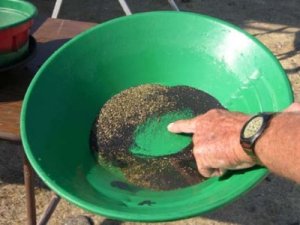
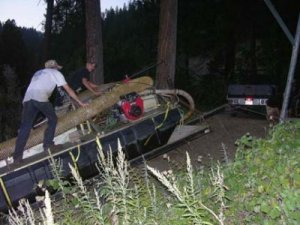
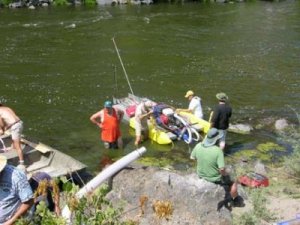
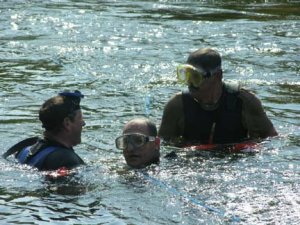
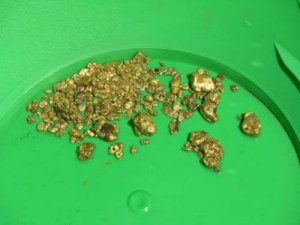
Happy Camp is really the small-scale gold prospecting capital of America. It is a great place to be during the summer months. The area is rich with gold mining potential. Local communities are very friendly to gold prospectors. The weather is fantastic.

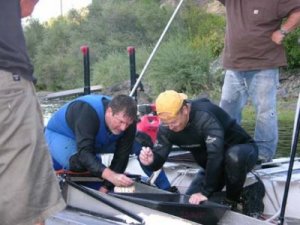
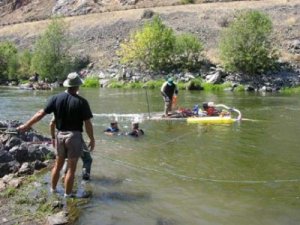
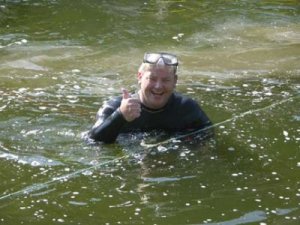
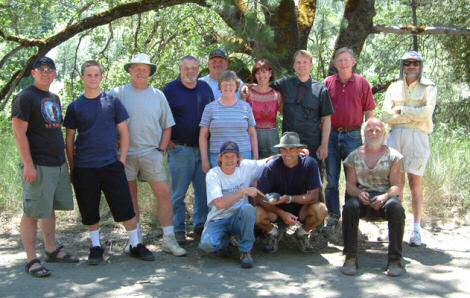
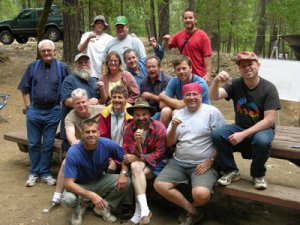
There were ten of us participating on this surface mining project, which included my two long-time, trusty assistants, Craig Colt and Dick Bendtzen. By surface mining, I mean prospecting for and developing gold deposits that are located outside of the active waterway. We do six 2-day (weekend) surface mining group projects and one week-long surface group mining project each season. We also do several week-long dredging projects. Everyone who participates is rewarded with an equal share of all the gold that is recovered during a project. It does not come free, though. We work hard for all the gold we recover!

Actually, how much gold we recover during the Group Mining Projects almost always comes back to how well we are able to organize ourselves into a cohesive team. All the participants on this Project showed up eager to go. Because Mary Taylor was along, I knew from the beginning that we were going to get a lot of gold! Mary is one of the most enthusiastic and dedicated gold prospectors I have ever met.

Having well over 60 miles of mining property to choose from in the Happy Camp vicinity (actually 120 miles when you count both sides of the river), we have plenty of choices where to do our surface mining projects. This time, though, we decided even before the Project that we were going to check out the far side of the river on the Club’s Wingate claim. This is located around 15 miles downstream from Happy Camp along the Klamath River. Very little has been done by members on this extensive claim over the years, mainly because a rather steep canyon separates the working-part of the claim from Highway 96. Even so, longtime members and very experienced prospectors, Rex & Earlene Kerr, had been telling us that they found a very rich gold deposit on the far side of the Wingate claim several years ago. They have since taken up dredging, so they never went back to finish cleaning up the gold. They said they were using a boat to get across the river towards the lower end of the claim.

The lesson I always try to put across to members, is that if you want to increase your chances of finding high-grade gold, do your prospecting in areas where other members have already been experiencing some success. As I know Rex & Earlene very well, when they reported finding a rich gold deposit at Wingate, I knew they were not kidding around. This is just one of the wonderful things about being associated with The New 49’ers; so many active prospectors are willing to share their success with others!

Craig Colt had the foresight to find Rex Kerr a few days before this Project and get him to go down to Wingate and show Craig exactly where he and Earlene were doing so well. So on the Saturday morning starting this Group Project, everybody was excited to go down there and get started!

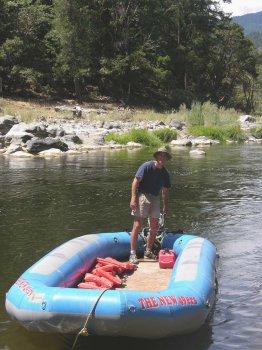
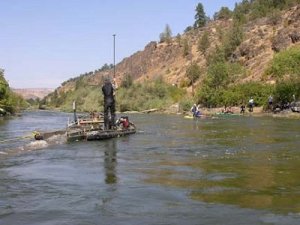
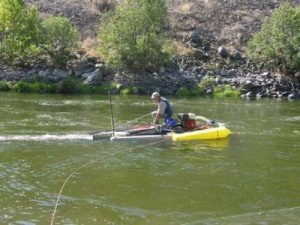
Wingate is a huge claim, with most of the workable part on the far side of the river. The first big challenge in this Project was in figuring out how we were going to get ourselves and our gear over to the other side. It didn’t take us long to figure out that a small boat can be launched at both ends of the claim. We decided to start at the top. Through some energetic teamwork, we had the boat in the water, and everybody across with sampling gear, within just a few hours.

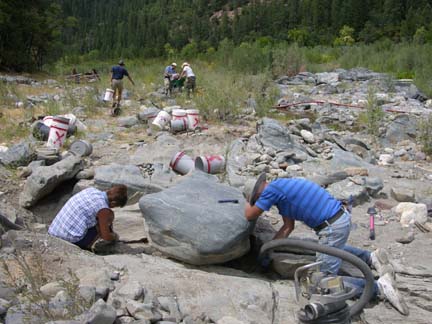
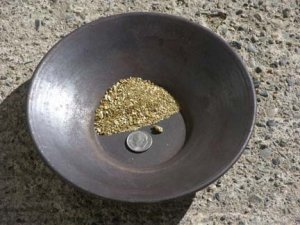
Once on the other side with lunch behind us, while Craig and a small team hiked down to see if they could find Rex & Earlene’s old workings, several others started digging out the bedrock cracks near where we landed the boat. Just within a few minutes, Mary was already whooping it up about finding some rich gold. Leave it to Mary to make the first strike! I was amazed how big the golden flakes were! Even though Craig and a few others had already headed down that way, Mary’s strike was enough to change our plans to immediately begin trying to develop something good right near the boat landing!

Expanding upon Mary’s success, we started using bars to break open bedrock cracks upstream and downstream directly in line with Mary’s spectacular find. Almost immediately, Mary recovered another pan of large, rich golden flakes. Wow! But our additional pans further away were not turning up high-grade. So we worked our way closer towards Mary, only to discover that she had located a small single deposit. Too bad! Just for a little while there, I thought we had discovered a rich deposit that was going to carry us all the way through the week. Like a dowsing rod, Mary had zeroed in right on a small hot spot!

Just as we were figuring out that Mary’s initial deposit was just a small one, one of Craig’s helpers returned to the boat for more gear. He told us that they were already into something good further downstream. That sure lifted my spirits! So I gathered up a few more helpers and off we went to see what Craig’s team had found.

Craig’s deposit was in a bedrock trough immediately upstream from where Rex & Earlene had been mining several years before. There was a thin layer of hard-packed streambed material on top of some very uneven bedrock. Through some trial and error, we discovered that the gold was coming from off the bedrock, and also out of the hard-packed material. This was good! While the flakes were not nearly as large as what Mary had found, the gold was plentiful. We devoted the remainder of the first day spreading out Craig’s discovery to make sure the gold deposit was large enough to justify bringing in a high-banker on the following day. It was!

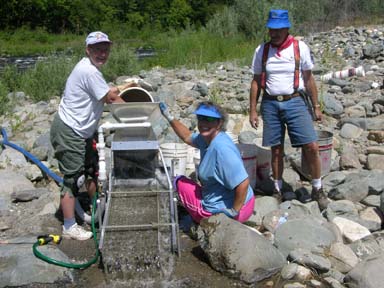
Dennis Taylor, Craig Colt & Dick Bendtzen
working the high-banker in Craig’s discovery.

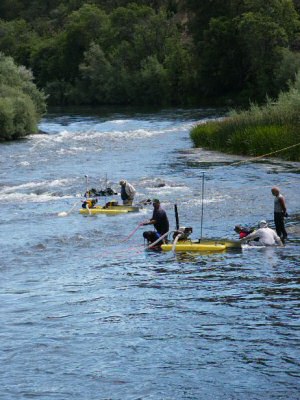
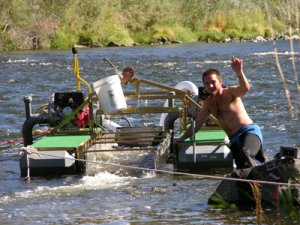
All of the bedrock irregularities over there made a perfect setting to set up a high-banker (small motorized sluice) for dredging on the following day. We did this by setting up a small water pump down near the river. By pumping water up into a suction nozzle, and allowing the water to flow back into our work area, we were soon dredging the hard-packed pay-dirt up into a sluice box. We were about 50 feet away from the river. Overflow water was caught by other natural troughs in the bedrock. This was a textbook situation for surface mining!

It is important to note that while no dredging permits are required in California to dredge in areas outside of the active waterway, there are regulations which prevent you from making too large of a hole up out of the water (without special permit), and which prevent you from putting dirty water back into the active waterway. Making sure we stay within these guidelines is one of my primary duties when we do these Projects.

By the end of the second day, we had fully worked out Craig’s discovery. We recovered a healthy amount of gold from that. But the good times were over. On the morning of day-3, we found ourselves sampling again. Deciding that we should check it out, we spent the first half of the 3rd

day sampling the upper-end of Wingate on the highway-side of the river. Preliminary sampling results looked pretty good. But the deposit over there seemed pretty spotty to me, and I was concerned to not lose a whole day or two trying to recover gold out of a lower-grade deposit, when we might still find something better further downstream. We always debate these tough decisions during the Projects, so everyone is able to take part in the process which evolves into the final result. After some discussion about our options, we split the sampling team in half, and I used the boat to place several samplers on the far side of the river towards the bottom-end of the claim. This took some creative boat work by Craig and me. We had to portage our small aluminum boat through a fairly bad set of rapids. But through some trial and error, we worked out a way to get the boat through the rapids in both directions without too much difficulty. Boating to the lower area of the claim was a heck of a lot easier than hiking down there!

Dennis Hoepfer helping to sample the lower-end of Wingate.

Down towards the lower-end of the claim, we started pulling excellent pans out of the exposed bedrock cracks right away. It didn’t take us long to discover a rich section of bedrock that was about 50 feet wide, starting about 30 feet from the active river. Most of it was exposed bedrock that had small pockets of hard-packed streambed which were loaded with fine gold. This place looked good! So during the afternoon of the 3rd day, we found ourselves relocating the whole team down to the lower end, with multiple vack-mining machines. Our mission was to discover if this deposit was worth working on the following day with the high-banker. It was!

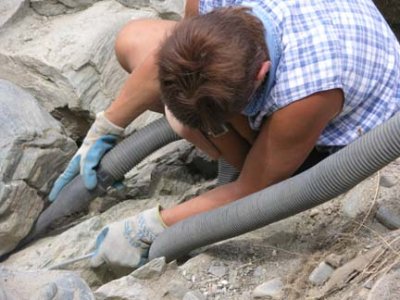
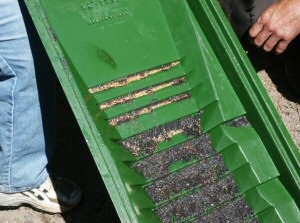
But rather than use the high-banker, the morning of the 4th day found our whole team working together to create a mini-high-banker using a Le’ Trap sluice with a special feed from two garden hoses. The problem with this new high-grade area was that, while plentiful, most of the gold was very small in size. We could not produce enough material with the vacks to feed a normal high-banker. Because the Le’ Trap sluice recovers fine gold exceptionally well, we came up with an idea to make a special water feed so we could process material from the vacks way up out of the water. The system worked great!


Mary Taylor & TaTiana Serbanescu working the cracks in the hot new area.

We devoted most of the 4th and 5th days to production mining with the vacks. We all took shifts at running the machines, breaking open cracks, filling buckets, screening the pay-dirt through an 8-mesh screen and feeding the Le’ Trap recovery system. While mostly fine in size, by the end of the 5th day, there was a lot of gold adding up in our bucket!

We don’t do a final gold clean-up every day during these Projects. The process takes too long. So we allow our gold concentrates to add up in a bucket until the last day. Then we clean it up all at once and split it off. But we do pay close attention to how much gold is present from each sample – or each production day. This gold was so fine and plentiful, that the concentrates were looking very rich. We were going to have a good week!

On the morning of day-6, Dick told me he was getting a very strong feeling about an area just downstream from where Rex & Earlene had made their big strike. So he decided to hike up there and do a few samples. It was quite a ways up there; but about an hour later, I thought I could see Dick waving his arms around. So I drove the boat over there to have a look. Sure enough, Dick had made the richest strike of the week! It was under about 2 feet of hard-packed streambed on bedrock. The whole area had been buried under about 6 inches of loose sand. That was the reason we missed it the first time we were sampling around there. Dick’s samples were producing large flakes and small nuggets. It was truly a rich find! This is not the first time Dick has discovered the big strike of the week. We are sure lucky to have him on these projects!

With only about a half-day remaining, we immediately mobilized a major move from the fine gold deposit we were working further downstream, with multiple boatloads of gear and people. By lunchtime on the 6th day, we were high-bank dredging in Dick’s new discovery. This was a different kind of mining altogether from what we had been doing the previous 2 days. Although adjusting to the change did not require much direction on my part. Everyone there had plenty of experience by then. We all just stepped in to do what was needed. With only a half-day remaining, we wanted to clean-up as much of Dick’s deposit as we could. We took turns operating the dredge, while also filling buckets with material and feeding the high-banker to achieve as much production as we could. My main focus remained on filling our excavation behind us, to never allow our open hole to become very large. I was also making sure that no dirty water ever got back into the river from our high-banker.

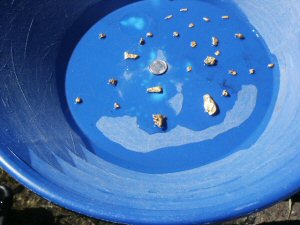
By the end of the 6th day, we had a good showing of larger-sized gold to go along with all the fines we had accumulated earlier in the week.

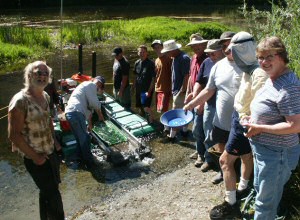
Everyone was working as a team to operate the high-banker on the last day. We wanted as many nuggets as we could get!

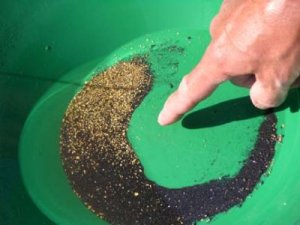
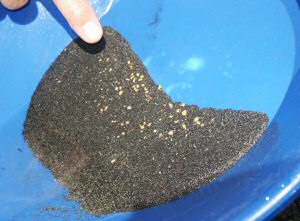
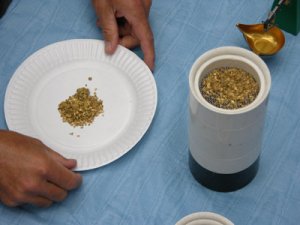
Normally, we use the 7th day to pull all our gear off the river and put it all away. We also do the full final clean-up process. Everyone participates in every step of this. Over the many years, we have worked out a system of final clean-up that retains all of the gold without the use of any mercury or other chemicals. This involves the use of a Gold Extractor – which is like a miniature sluice with very low-profile riffles. When set up properly, this device will work all of your concentrates down to all of your gold with no loss whatsoever, along with only about a tablespoon of black sands remaining. Then this final material can be dried and run through a set of final clean-up screens. Once separated into different size-fractions, it is very easy to separate the gold from the last of the impurities. We mainly do this by blowing off the impurities, which are about 4 times lighter than the gold.

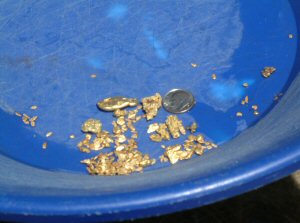
Phil Maher & Sara Rese showing off some project gold!

At the end of the 7th day, we split off the shares of the gold evenly between all the participants. Everyone was excited to get their share. We then took a moment to review our week and discuss the things that we did, and the decisions that we made along the way, which led us into our good fortune. Sampling is an interesting process whereby every key decision you make is like a crossroads that will directly affect the final outcome. Each time we do one of these projects, we come to the very same conclusion that you should never give up hope; that if you just stick with the process, you will always get right into the next gold deposit.


By Sandy Waldie

We had a record gathering in Happy Camp for the first weekend outing of our season. The Pro-Mack store was jumping on Saturday morning, while we were getting everyone signed in and equipped. We had a total of 103 people attend this outing, which included two sets of reporters and their cameramen. Alex and Vlad were here for a Russian television station, so they were gathering information on “The New California Gold Rush.” The other two journalists, Justin and John, were from New York. They were representing Fortune Small Business Magazine, speaking with those in attendance regarding their feelings on gold prospecting, why they were here, and what they enjoyed about the whole adventure. Both teams caught a little “gold fever” themselves and could be seen sitting by the river looking for that glint of sunshine in their own pans.

The weather cooperated beautifully for the weekend with lots of sunshine; and of course, the ever-present sights and sounds of the great outdoors.

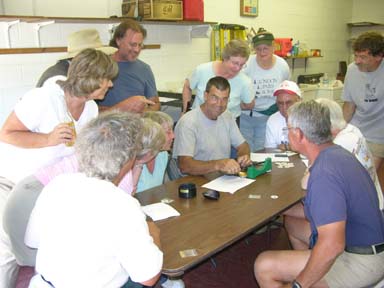
On Saturday morning, everyone gathered at the Happy Camp Lions Club to hear from Dave Mack about how and where to prospect for gold, the type of gear we were going to use and safety precautions. This was an opportunity for everyone to have all their questions answered about how to locate high-grade gold deposits. Just walking into the Lions Hall would have convinced any bystander that this was a very excited group!

Armed with all the useful information and necessary gear, we all headed off after lunch to K-15A. This is one of the Club’s most popular mining properties otherwise known as “The Mega Hole.”

Once we arrived at the chosen destination, logistics came into play of having so many people involved. So, with megaphone in hand (one complete with siren to get everyone’s attention), Dave had nearly everyone split off with 5 separate team leaders to begin our afternoon of sampling and panning. Dave had already explained that we needed to stay out there until everyone knew how to operate a gold pan efficiently. Through organized teamwork, we needed to locate some fresh high-grade gold deposits. We would return to work these areas with high-bankers on the following day. It didn’t take long before we had an army of people out there sampling for gold.


Images by Vladimir Badikov

Saturday afternoon was filled with camaraderie, lots of smiles, a few dips in the river (not always on purpose), sometimes the sound of moaning over seldom-used muscles, and questions, questions, questions. Dave’s team-leaders and several other very experienced members worked hard to get everyone on the right track. And sure enough, we located two separate high-grade gold deposits before finishing up on Saturday afternoon. There were still people out there panning their first gold (ever) when I departed for the day.

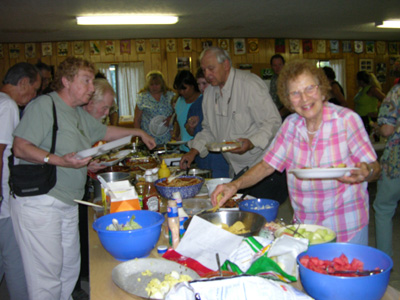
We also experienced one of our largest-ever potlucks that evening with an attendance of over 133 hungry prospectors. There was so much food that the tables resembled a grand smorgasbord! Old members met new members, and the stories ran wild. “Did you hear the one about the guy who dredged up the ten pound nugget?” (sort of like the fish growing from two pounds to thirty between the

catching and the landing!) A very good time was had by one and all and some even forgot the aches of those muscles (until they woke up the next morning and tried to get out of bed).


Image by Vladimir Badikov

Sunday morning was greeted with the same enthusiasm as on the first day of the project. Spirits were more than willing, but it did take some of the bodies a little while to catch up. Today was going to be devoted to digging-up the high-grade gold deposits that we had located on Saturday afternoon, placing the material into buckets, and then feeding the buckets into several high-bankers to recover the gold. This was a volume program designed to recover as much gold as we could in about three hours of hard work. Everyone pitched in to help. In fact, several of the team-leaders had arranged for their helpers to show up early and get things off to a strong start.

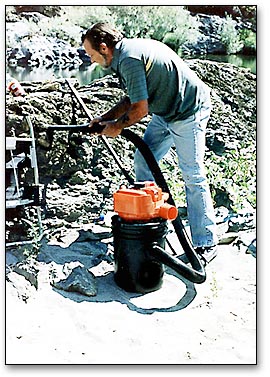
Someone brought along an ingenious suitcase vacuum system (you would have to see it to believe it) that defies explanation from me. He was using that to suck up high-grade material which had been discovered between two storm layers, and it worked like a charm! Others were feeding that material into the high-bankers.

During a short lunch break, everyone had their first glimpse of what all their hard work was for. You could almost touch the excitement when Dave swished around a sample from the high-bankers in a gold pan for all to see. Anyone who has ever experienced that moment knows exactly what I am talking about; gold fever! We were getting a lot of gold! It didn’t take long to finish our lunches and get back to filling buckets with golden pay-dirt!

For myself, I can only tell you that it was wonderful standing back and observing all of the excitement and adventure. Everyone was laughing, smiling (a few groans), and really enjoying not only the prospecting, but the friendships which were being formed. It didn’t take long to be on a first name basis and start comparing the holes they were digging. “Should we go deeper, wider, to another area, or what?” “Your hole is looking good; what about this dirt I have?” Dave had assigned several experienced gold panners to keep showing people how much gold was contained in the material that they were shoveling into buckets. By the looks of the pans, the gold was going to really add up! Before long, questions answered, most knew what to look for and knew their efforts were being rewarded by what was being found.


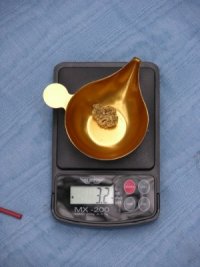
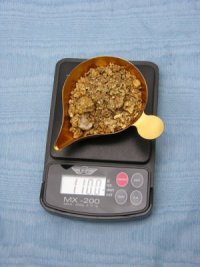
The final clean-up revealed a total of 1.25 ounces of beautiful gold. There were two very nice gold nuggets which weighed in at about 9 grains each. We drew tickets to see who would receive a nugget as their reward for the day’s work. Laughter and smiles continued right on through the weighing and distribution of equal shares of the remaining gold.

Much more than gold was found on this group prospecting adventure. There were new friendships and golden memories that will last a lifetime! Here follows a video segment which was put together from different parts of weekend events:

We hope you can join us on one or more of the other weekend prospecting projects scheduled for the 2008 season:

Note: These events are free to all New 49’er members. Please register in advance by contacting our office.


By Dave McCracken General Manager

“This was one of those few times in life where the accomplishment in itself, along with the shared experiences, were worth as much as the gold.”

Dave Mack


There were 18 participants in this gold dredging Project, including myself. We decided to do it on the Club’s K-13 property. Other New 49’er members had discovered high-grade gold on both sides and in the middle of the river in that area over the years. Since K-13 is such a long mining claim, we figured the earlier mining activity could barely have scratched the surface of the larger gold deposits which pretty-much extend continuously down the full length of the Klamath River.

We have been finding consistently during these Group Mining Projects that if we just launch an aggressive sampling program into an area where other members have already found gold on New 49’er properties, we always seem to be able to discover that some meaningful part of the high-grade gold remains in place – sometimes even the best part of the pay-streak!

People wonder why we always seem to be able to get into high-grade when we do these Group Projects. Really, there is no secret to it. The first thing we do is choose a place along the river where we are nearly certain that high-grade gold deposits exist within reach of the mining equipment that we will use. This is nearly always the result of other New 49’er members having already discovered high-grade in the same area at some time during the past. Then we perform an aggressive, coordinated sampling program into that immediate area.

We were using 4 dredges on this project, because we had a pretty large team. Using four dredges provided us with a sampling-advantage, in that we were able to carefully coordinate the sample holes while paying very careful attention to where the gold traces are being found. In a step-by-step process, we are able to walk our way right up into the high-grade gold deposits.

We initially arranged to have 2 chemical toilets delivered to a large gravel bar and river access area (named “Sluice Box”) located towards the upper-end of K-13. There was plenty of room there to organize a group camp. But, early on Saturday morning, our shore boss, Otto Gaither, suggested we set up our camp a little further downriver on K-15A. Several other members had just vacated that area, which left plenty of room for a group camp with more natural shade. So we sent a small crew over on early Saturday morning with a flat bed trailer to move the toilets down to K-15A.

The first day on these Projects (Saturday) is always planned for setting up our group camp in the vicinity of where we will spend the week on the river – and to get all the mining equipment moved to the river and set up. Depending upon the circumstances, sometimes we even have time to get the sampling program started on Saturday afternoon.

This time, though, we used up all of the first day launching gear and positioning it on the river. This was the first time we had ever used an 8-inch dredge on one of these Group Projects. Launching the larger dredge into this particular section of the Klamath River required us to disconnect the flat bed trailer from my truck and use a winch to lower it down a sandy access trail to the river. All of this took some very coordinated teamwork and a lot of effort. But we finally got the big dredge into the river. Otto captured the following video sequence as we wrestled that big dredge into the water:

We were also using two 5-inch dredges on this Project, along with a great 6-inch dredge that Richard Dahlke had brought along. Those dredges all went into the water quite easily after what we went through to launch the 8-incher. We were using a small motor boat to help position dredges on both sides of the river, and to move people, gear and supplies up and down the river all week long.

My trusty assistants, Craig Colt, Andrew Inks and Jake Urban were all present on this Project to give a hand. Our shore boss, Otto, was also present to help organize all of our ongoing support needs, capture some video, do the photography, make sure there was a pot of coffee ready every morning, and generally help with everything else that needed doing. We call Otto “Mr. Mom.” In turn, once in a while, if we start crying or complaining too much, he starts calling us names, like “Sally” and “Betty.” Otto keeps everyone reminded that life is too short to not enjoy yourself at least a little bit every day. He adds a friendly, human side to these Projects. We are lucky to have him!

Andrew and Craig agreed to manage the 8-inch dredge. Jake agreed to supervise one of the 5-inch dredges; the one where we would help beginners get through the early stages of underwater mining. Richard Dahlke agreed to supervise a team using his 6-inch dredge as the primary sampling rig on this Project.

Matt Johnson agreed to supervise the second 5-inch dredge. Matt had participated on an earlier dredging Project and had already proven himself to be a dependable and experienced dredger and team-leader. Also, from several days of dredging before the Project started, Matt and his wife, Jennifer, had already located some kind of gold deposit using their 4-inch dredge on K-13. So the immediate mission for Matt’s team was to open up that area using a 5-inch dredge and establish where (what layer in the streambed) the gold was coming from.

We all split off into separate teams early on Sunday morning, with each of the 4 dredges having their own assigned targets to complete. These individual dredge targets are part of a bigger sampling plan where we attempt to: (1) establish where the strongest path(s) of gold is traveling down the river; (2) establish which layer(s) within the streambed where the richest gold is located, and; (3) then locate the high-grade gold deposits within those zones.

The following video sequence captured a typical morning on one of these Projects. Our entire team meets every morning to review how progress is being made on the larger sampling program, to better-coordinate our efforts and to set new targets for the upcoming day:

Since Craig’s was the most experienced team, using the 8-inch dredge, their mission was to push a sample hole out towards the middle of the river. Not surprisingly, they immediately started turning up lots of fine-sized flake-gold over towards the edge of the river. The reason we were not surprised, was because other members had already long-established a continuous line of fine gold in the hard-packed gravels along the Highway-96-side of the river throughout the entire length of K-13. But others had found higher-grade deposits out in the center of the river in the vicinity of where we were sampling. That’s what I was hoping we would find! But after several days of hard work, we pretty-much discovered that those earlier members dredged out the middle in that area. Too bad! So Craig’s team ultimately decided to devote the remainder of the week to working the fine gold deposit closer to the edge of the river.


While I do oversee the bigger sampling program during these Projects, early in the week, I am mainly concerned with helping beginners work through the early steps necessary to get them underwater. This is so they can become a meaningful part of the forward momentum that is necessary to recover exciting amounts of gold from the bottom of a river. Gold mining is a volume-sensitive activity. The more work you get accomplished (in the right places), the more gold you end up with. So, early in the week, I am eager to help all participants get off to a good start. The following video sequence captured a typical setting during these Projects when we are helping some beginners to get started:

It is normal for some participants to arrive with a healthy fear of the water. Actually, everyone has a healthy fear of the water. That fear just happens to be energized more-easily in some, than others. People who arrive afraid need some special help during the beginning stages. We always start them in shallow-enough water that there is zero chance of drowning, and nearly zero chance of encountering any traumatic experience. Under very controlled conditions, we assist beginners to overcome the initial fear, simply by starting them doing things which they are comfortable with. This might begin with just floating around along the edge of the river while getting used to looking through a face mask or breathing through a hookah regulator. In a step-by-step process, it seldom takes long to be out there holding beginners just underwater so they can get used to breathing down there. Having helped hundreds of members through these early stages, I have found that most people are able to overcome the initial fear on the first or second day. By the end of the week on these Projects, most beginners have worked their way onto an important part of the underwater-production aspect of the program. Once in a while, it is a beginner that makes the highest-grade discovery of the week!

Jake’s 5-inch dredge remained in the same place all week long. This was because the dredge was recovering a handsome showing of fine gold alongside the highway-side of the river. Several beginners graduated up to Matt’s dredge that was working the very same fine-gold deposit further upstream, only in deeper water. The remainder of the beginner-team utilized the rest of the week to develop a production dredging program so they could recover as much gold as possible.

We established on the first day that the gold was being recovered out of a tan-colored hard-packed streambed layer which was resting on top of an older grey-colored layer. The key to production was to dredge up as much of the tan material as possible.

One of the really nice things about these Projects is how much help and support that team members give to each other – especially when getting into and out of the water with dredging gear strapped on. Otto captured this following sequence showing a beginner get into the water, just as he was starting to feel some personal confidence underwater:

As Matt and Jennifer had already located some kind of pay-streak further upriver the week before, we decided that would be a great place for them to operate the 5-inch dredge during the first day or two of this Project. But when we towed the 5-inch dredge up there using the boat, we discovered that someone else had already moved in on the location. This turned out to be an old grizzly-looking gold miner who materialized there from 150 years ago. When we pulled up in the boat, he gave us a very friendly welcome and showed us all the gold that he was recovering from just digging gravel from the bottom of the river (using a shovel!) in about 5 feet of water. He had a lot of gold to show for his effort!

As we had already targeted that same area for some dredge sampling, but the other guy was in there ahead of us, we were initially concerned about not stepping on his right to mine the immediate location. But he told us that he didn’t mind, because he did not have the equipment to get further out into the river where we wanted to go. There was plenty of room for everyone. Otto captured the following video sequence showing us working side-by-side. It’s only one of the few times I have ever watched a prospector recovering an impressive amount of gold from underwater with the use of a normal hand-shovel!

That’s one of the great things about The New 49’ers. You are always meeting such nice and helpful people!

Matt’s team opened up a test hole not far upstream from where the member was shoveling gold off the bottom of the river; and it only took a few hours before Matt was showing us some incredible initial sample results. Here follows a video sequence that was captured just as Matt and Jennifer were showing off the first good sample result from their dredge:

Several participants from the beginner dredge then moved up to help Matt and Jennifer; and I have to say, that was the highest-morale I have seen in a dredge team for as far back as I can remember. They sure were having a great time!

Bob Dahlke (Richard’s Dad) had specially-built a 6-inch dredge for us to use on this Group Project. What a great machine! We had to keep reminding Richard to turn the motor down so the dredge wouldn’t suck someone’s arm off! Those guys really know how to build a dredge!

Once the beginners were all doing well in the water, I spent most of the remainder of the week working close with the Dahlke team in search of high-grade gold. We were looking for nuggets, baby! I knew there was a strong line of beautiful gold nuggets extending down the far side of the river (the side opposite Highway 96), because we had a member devote an entire winter several years ago, dredging up nice nuggets off the far side. I saw the gold. Other members have also occasionally tapped into that same line of beautiful nuggets. As K-13 is such a very long claim, I personally believe that most of the nugget deposits on the far side have yet to be discovered.

So it was with this in mind that we started Richard’s team early in the week, sampling the far side of the river. The problem was that they were finding a lot of sand over there. The thing about sand is that you never know how deep it’s going to go without at least trying to dredge a hole down through it. So you can eat up days and days just trying to reach down to find bottom!

Richard’s dredge touched down on bedrock several times in the first few days. Each time, he recovered a nice showing of gold; mostly which consisted of bigger pieces than what we were finding on the Highway-96-side of the river. We were encouraged, but mainly overwhelmed by an endless flow of sand sliding into the sample excavations.

When I finally had more time to spend with Richard’s team, we began a sampling process of swimming around with mask and snorkel, free-diving (without hookah) down to survey the bottom of the river. We were looking for places that the boulders and hard-packed streambed were not buried in sand. This is accomplished easier without the added floatation of a wet-suit. Sometimes, in deeper water, we will do bottom surveys similar to this by operating the dredge at idle-speed to provide air for the divers, and just allow them to pull the dredge around by the suction nozzle until they find a location that looks like a good place to do a sample. In this case, a shore team usually has to work the side and rear tie-off lines from the dredge along the riverbank. The following two video sequences captured this important underwater prospecting activity as it all played out:

With some help from me, Richard’s team surveyed the bottom of the far side of the river for the longest way; perhaps a quarter-mile or so. We were looking for places along the river bottom where we could get some samples without having to move a lot of sand out of our way. As we started moving upstream, we found that the sand deposits were no longer present once we got to where the water was moving along in a steady flow.

With only a few days remaining in the Project, I was very motivated to try and tap some of those nuggets! The problem was that once we got upstream of the sand deposits, nearly the entire flow of the Klamath River was directly alongside the bank in about 20 feet of water on the far side. This created near-impossible (fast water) dredging conditions! Still, just to get an idea, Ray Derrick and I went down to give it a try. The water was so fast in that place, we were mostly down there holding onto upcroppings of bedrock, flapping like flags in a strong wind! But we kept at it hard enough to get a pretty good sample; and sure enough, there were a few bigger pieces of gold in the sample result.

The problem, though, was that we could not gain access to the high-grade gold deposit from the far side of the river. The water was just too fast over there. So we found ourselves having an important discussion on the bank of the river; the same discussion I have found myself having countless times before. We knew where the high-grade gold was. How could we get it off the bottom of the river?

Basically, we had two options: One was to drop further down river to where the water slowed enough to allow us to do some work. The other was to swing the dredge across the river and try and gain access to the deposit which we had already located from over there. This second option would require us to put divers in the river on one side of the river. Then, once the dredge was running, the divers would need to walk the suction hose nearly all the way across the river to do the dredging. Operationally, this was much more difficult than the first option. But with only a few days remaining in the Project, I felt more comfortable going after the sure thing in the second option. After all, we had just found some rice-sized pieces of gold in that sample!

Rigging-up for this exercise meant that we would need to keep a dredge tender on the dredge platform at all times, so he or she could knock plug-ups out for us without our having to pull the dredge all the way back across the river. We rigged the dredge with two ropes; one from upstream to keep the dredge from getting swept downriver by the current; and the other from the rear, to prevent the dredge from motor-boating beyond where we wanted it to position on the river. Otto captured the following video sequence as we completed the first encouraging sample out beyond the middle of the river:

One person was placed on each of the ropes with instructions to allow the dredge to follow us out beyond the middle of the river where we wanted to dredge. This is not hard to do, because you can get a pretty good idea where the divers are by where their bubbles are surfacing. The dredge had a 25-foot suction hose which was clamped tightly to the power jet. So, as long as they allowed a little slack in the lines, they would allow us to drag the dredge out to where we wanted to go. We worked it out after a little trial and error; and soon we were back out within a few yards of where Ray and I had taken a sample off the far side about an hour or so earlier. The following video sequence captured how we were able to dredge high-grade on the far side of the river. Check out the nice nuggets we were finding out there!

But this time, since we were dredging from the slack-water side of the river, we had almost no fast current to contend with. We were making progress!

Without the fast current to slow us down, we were able to get a good sample finished in about an hour. Sure enough, when we checked the sluice box, there were some nice pieces of gold there to pay for all the effort! We were getting gold nuggets!

But now we had a new problem: The slack-side of the river we were launching from was actually a great big, slow-moving back eddy; and the silty water from our tailings was washing back around to completely eliminate underwater visibility throughout the entire distance between the bank where we were launching from, and the fast water on the far side of the river. So, getting back to the bank from the place we were dredging meant having to traverse almost all the way across the river in zero visibility. The water was deep and pitch dark (on the bottom) out there!

Traversing back out from the bank to the underwater work area through zero visibility was even harder, because it meant that we had to find the dredge excavation. This was not going to be easy!

After coming up with the first good sample result, the second underwater crew completely failed in their attempt to find the underwater work site. We all watched in amazement as their bubbles showed that they were all over the place down there; just about everywhere but where the work site was. Ultimately, both divers decided that they were not up to the task.

As the work site was actually out in the river’s current, that area was not being clouded-out by the tailings water. It was only the large slack-water area in-between the bank and the current (nearly all the way across the river) where we could not see a thing (near total darkness). It was a long way to go in the dark!

Crawling around along the bottom of a river in the pitch black can draw some serious, primal fear out of you. Do you remember those really nasty nightmares you had when you were just a little kid? That sort of thing! I suspect this has to do with deep, hidden genetic memories, perhaps from times long ago when human beings were not at the top of the food chainâ?¦

I have experienced a lot of deep, dark-water adventures in my time. It always scares the heck out of me! It is definitely not something the average participant in these Dredging Projects signs on to do!

So after our second team failed to get out to the site where we were finding the gold nuggets, we found nearly all of our project crew in a serious discussion about what to do. Several participants felt like they were up to the task. Mario Marroqim volunteered to give it a try, even though up until just a few days before, he had never even breathed from a hookah system before. Ultimately, Mario got out there without any problem.

After seeing the gold from that sample, quitting was not an option that was even considered by the team. It was just a matter of working out who and how we were going to do it. These more difficult conditions required us to pause and catch our breath.

Thursday found us with several teams of divers ready to take shifts on the Dahlke dredge, along with a more-experienced shore crew that had already learned to play out the dredge lines to allow the dredge to follow the divers nearly all the way across the dark river. Since the divers could not see anything underwater in the slack-water area, we worked out a system whereby they would hold onto the suction nozzle together and just crawl out towards the far side as fast and straight as they could go, until they felt the river’s current. As the current was flowing clean water, visibility would return just as soon as they got out there. Then it was just a matter of following the current up or downstream until the excavation was located.

Pretty soon, we were spending more time dredging, than planning – and the gold nuggets started adding up. Here follow 2 video sequences that were captured as we were cleaning up some beautiful gold nuggets from several different dives:

Morale was very high on Thursday afternoon when it was time to dump-off the dredge-sluice from the day’s run. Besides recovering some really nice gold, we all felt a strong sense of team-camaraderie, knowing that we had overcome something difficult together; something that required courage and teamwork. It was a good feeling of accomplishment.

It subtracts too much time to do a final clean-up of gold production every day. So we allow all of our concentrates to accumulate in a bucket, and we deal with all of it on the final day. Friday’s clean-up on this Project was particularly challenging, because most of the week’s gold production was in fine gold.

All participants always participate in the final clean-up steps. This is because there is a lot of work involved with separating all of the gold from all of the black (iron) sands. When we had all of the week’s gold concentrated down into a single gold pan, I would have bet anyone that we had accumulated at least a pound. It really looked like a lot!

The following video sequence captured the steps that we usually follow during a final clean-up. Check out how much gold looks to be in that gold pan!

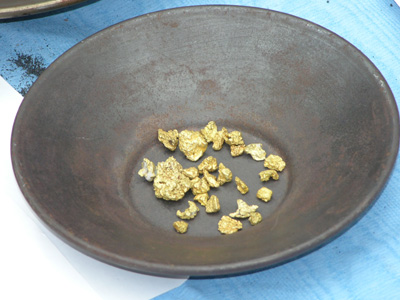
Ultimately, though, by the time we removed all the black sand from the week’s production, we ended up with a total of 4.92 ounces. There were 1.4 ounces of nuggets. The largest nugget weighed 2 pennyweights.

While we have recovered more gold in other Projects, I don’t ever recall another time when the participants needed to overcome more difficult circumstances to win the prize. This was one of those few times in life where the accomplishment in itself, along with the shared experiences, were worth as much as the gold.


By Dave McCracken General Manager

Dave Mack


We have learned over the years that no matter how good some mining property is, most beginners and moderately-experienced prospectors might need a little help in figuring out how to locate high-grade gold deposits. This is partly because different geographical areas may have been affected by different types and magnitudes of geological events which may have deposited gold in different ways. While the fundamentals will be the same everywhere, finding high-grade gold deposits in our part of the world may require a different prospecting focus than elsewhere.

Some people arrive in Happy Camp who have never even prospected for gold before. Some have never seen gold in its raw state. Some who arrive do not even believe there is any gold left to be found! Just about everyone arrives needing some amount of assistance in understanding how successful gold prospecting is being accomplished along our mining properties.

This is why we started organizing weekend group mining projects, and have been scheduling them throughout each mining season for the past 20 years. We know how important it is for members to get off to the right start on our mining properties. So I personally join in and supervise nearly all of these weekend projects, myself. I also get a lot of help from other experienced members who enjoy going out on a weekend and finding gold; sometimes, lots of it.

We had a number of experienced helpers along on this particular weekend project. Otto Gaither is often referred to as “The High-banker Kid.” That’s because his personal high-banking machine is always producing in good gold. Otto has been helping out on all of the weekend projects for several years. Craig Colt has also been helping for years. Craig’s nick name on the river is “The Nose.” This is because Craig can smell-out a high-grade pay-streak better than anyone else that I know. While we went into one of Otto’s favorite high-banking areas on this project, it was Craig that found the rich gold deposit. Together, we make a great management team for these weekend gold mining projects!


The way that Craig finds these gold deposits, is that he just aggressively follows our basic sampling plan. It is the very same plan that we use in all of our gold mining projects. This is a simple plan that we have developed over many, many years of serious prospecting. Because it is the plan that will get you into high-grade gold every time, we devote a big part of these weekend projects explaining and demonstrating for everyone how it is done. In fact, this is the reason we organize these projects in the first place; to get as many members as possible following a sampling plan that works!

Our weekend high-banking projects are free. But you must be either a Full, Associate or Affiliate Member to participate. Each participant receives an equal share of all the gold that we recover on Sunday.

Weekend projects begin at 9 am on Saturday morning. Participants arrive at our headquarters (from all over the world), and are directed down to the Happy Camp Lions Hall where there is a comfortable place to sit down. A fresh pot of hot coffee is always ready to go. After introductions, we devote the remainder of Saturday morning to a discussion about where we will be going, and about how we will all be working together to locate a high-grade gold deposit. Using a chalkboard to demonstrate the theory, I invest a few hours into providing a substantial explanation of what the basic sampling plan is, and why this plan will always lead you into high-grade (as long as high-grade exists within the area that you are prospecting). I make it a point to answer any and all questions.

After lunch, we meet back at headquarters and carpool to whatever mining property we have chosen for the project. Sometimes we use a boat to get everyone across the river.


This particular project found us prospecting on the Highway 96-side of upper K-15A, otherwise known as the “Upper Mega-Hole.” Participants are supposed to bring their own basic prospecting tools, and especially a gold pan. They should wear clothes and foot ware that they don’t mind getting dirty and wet. A container or two of drinking water is always a good idea!
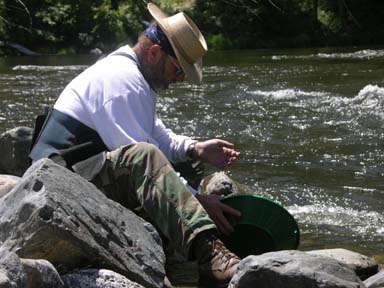
After everyone is gathered together out on the mining property, I take a moment to relay all or most of

the important information that we have collected from previous mining activity in the area. This is veryimportant; because knowing where others have found high-grade in the past will allow everyone a head start in being able to find more during the project.

Because gold is very heavy, it follows a common path down the waterway, and nearly always deposits along the bottom-edge of hard-packed layers of streambed. So if you know where others have already found high-grade in the area, you then know where to target your samples to find it again. This is what the basic sampling plan is all about! Since we do not have much time on a 2-day project, my personal mission is to direct as much energy as possible towards the areas where the gold is most likely to be found. The following video sequence captured some of our beginning moments as we began sampling for high-grade:

Once we are out there, the first thing everyone needs to do is demonstrate that they can operate a gold pan well. The remainder of Saturday will be devoted to locating a rich gold deposit with the use of gold pans. If your panning method is not capturing every speck of gold, you can easily miss the pay-streak even if you place your samples right down in the middle of a good deposit!

So after providing a panning demonstration to everyone who wanted to see it, I devoted the first hour or so just going around and critiquing everyone’s panning methods. Otto also helps with this. It usually comes down to just a few people who need some extra help. We focus on that until everyone in the program knows how to pan for gold without losing any in the process.

Since it is also important that we find high-grade before Saturday is finished out on the river, Craig and other experienced helpers usually get started in a serious sampling effort as soon as we get out on the river. This day was no different. Craig disappeared soon after we arrived on the river. So, as soon as everyone was panning alright, I went hunting for Craig to see if he had made any important gold strikes, yet. I found him towards the upper-end of K-15A. Craig was digging around the top layer of big rocks within the top layer of hard-pack.

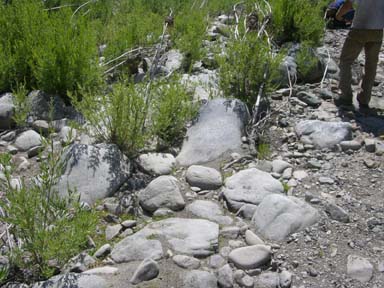
Hard-packed streambed viewed from the surface.
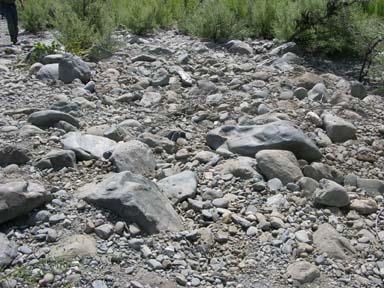
Fortunately, most of the high-grade gold deposits that we find in surface mining (out of the water) are located around the top layer of imbedded rocks. I say “fortunately” because it means you usually do not need to dig very deep to recover the gold. We believe most of the gold that we find in this top layer of hard-pack is gold that has washed down during large winter storms. This is why some prospectors call it “flood gold.” Imbedded rocks which protrude up through the surface layer form natural riffles. Gold being washed downstream during high-water becomes trapped between the rocks. Sampling is mainly a matter of freeing-up the top layer of embedded rocks, and panning the gravel-material that is between and just under them.

Craig was busy following the basic sample plan when I found him. He had placed himself in the same path, just a short distance upstream from where some earlier prospector had made a strike. Craig was gathering his sample along the bottom of the same layer of streambed that the other prospector was finding his gold. As Craig was digging in hard-pack, he already knew that no other prospector had been there since the flood layer was created by a major flood storm (probably the great flood of 1964)

In gold prospecting, the bigger the sample, the more accurate and dependable the result is going to be. Since we cannot make our gold pans bigger, we compensate by using a classification screen to eliminate larger-sized gravel and rocks. This allows us to double or triple the amount of gold-bearing-sized material that we actually process in the pan. Craig was screening his sample into his gold pan through an 8-mesh screen. The larger-sized material was being tossed to the side of where he was digging.

I showed up just in time to watch Craig work his sample down in the gold pan. And sure enough, there was a good showing of gold in the pan; 3 or 4 nice middle-sized flakes. Craig told me that the previous several pans were about the same. So Craig had already made a strike for this weekend project, just in case we were not able to find something better during the next few hours. This was good; my worries were pretty-much over for this project! Craig is my personal insurance plan that we will always recover some amount of gold on these projects!
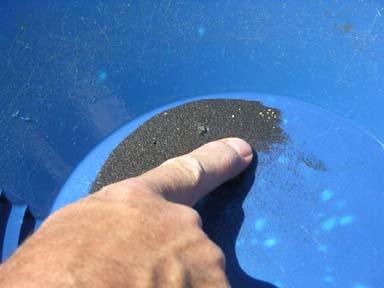
Having been managing these prospecting events for more than 20 years, my worries come down to: (1) don’t hurt anyone, and (2) make sure everyone leaves knowing how to operate a gold pan, and (3) send everyone home with as much gold as possible!

Wandering back down to where most of the others were actively sampling, several participants already had some pretty encouraging results of their own to show me. This is always the most rewarding part of the weekend for me. My job out there is to look at and compare the results of all the sampling. Someone is always finding something that looks encouraging. So, I ask others who have not been finding very much to help expand the sampling effort where we are finding more gold. Within an hour or so, we usually have everyone out there doing pan-samples in several different strikes. There can be a lot of excitement to go along with this. This is especially true with people who have never found their own gold before!

Here is a video sequence that captured how we were all working together to establish some high-grade gold:

One of the most valuable things we do during these weekend projects is show all of the participants exactly what hard-packed streamed is. “Hard-pack” is streambed that is formed by a major flood storm after pay-streaks are already formed. There is a world of difference between loose material or tailings from earlier mining activity, and naturally-formed streambed material (hard-pack). It is vital to know the difference, because almost all of the high-grade gold you will find along New 49’er mining properties will be located at the bottom-edge of one or more layers of hard-packed streambed. Knowing what to look for allows you to target your sampling activity at the right areas.

Another very important thing we do in these weekend projects is demonstrate how to place a relative value upon the amount of gold that is being found in a pan-sample. It is not unusual for a person to walk up with a great sample result, and say, “I didn’t get very much!” And it’s true that there is not very much gold in the pan. But that small amount of gold is only from about a single shovel of streambed material. That is a very small volume! Getting 4 or 5 nice little flakes of gold in a single pan can relate to a half-ounce or more of gold on Sunday when we have a dozen people shoveling the very same material into a high-banker!


A small showing of gold in a single pan-sample can add up to a lot of gold once you start processing more volume!

So, one of our goals during these projects is to help all of the participants gain the ability to relate how the gold found in pan-samples (on Saturday) will add up in a high-banker that will process more volume of the same material (on Sunday). While I am evaluating pan-sample results on Saturday afternoon, I make it a point to show around the sample results coming from the areas that we will work as a team on Sunday. I also try and get everyone to do some personal panning in those very same areas. This goes a long way to help beginners form a personal judgment about what is a good sample result when panning.

But on this particular day, most of the participants were totally absorbed in all the gold they were finding. Everyone gets to keep for themselves all the gold they find on Saturday afternoon. There was a lot of excitement going on; some people were yelling out their enthusiasm, having found their first-ever gold!

We do a weekly potluck gathering at the Happy Camp Lions hall nearly every Saturday evening during the season. The gathering starts at 6:30 pm, and we start dinner at around 7 pm. Then we do a short meeting and have a prize drawing. We have a lot of fun, and it gives members a chance for a weekly get-together.

Some members look to the Saturday evening potluck as the highlight of their week!

To give everyone some time to clean up and pull something together to contribute to the evening meal, we wrapped up the sampling program out on the river at around 4:30 pm. Some participants were having too much fun out there to quit when we did. Still, I did notice that they made it to the potluck in time for dinner! We filled the Lions hall that evening, as we usually do.

Sunday morning found our energetic group packing several motorized high-bankers over to where we had made our strikes the day before. A high-banker is basically a sluicing device which can be set up near to where you want to dig. This way, your pay-dirt can either be shoveled or dredged directly into the recovery system, rather than packed some distance across land. A motorized pump provides water to the system through a flexible pressure hose.

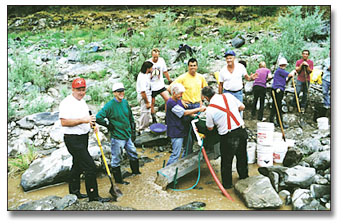
With all that help, it did not take us very long to get things set up. We split the group into three different teams, each to operate their own high-banker. It wasn’t long before team leaders on each crew organized the activity. Some people were tossing the top loose rocks into piles. Others were using picks and pry bars to loosen-up the top layer of hard-pack. Others were filling 5-gallon buckets about half-full and packing the pay-dirt just a short distance to the high-bankers. Others were pouring a steady feed of material into the high-bankers. There was a whole lot of productive activity going on! Check out the following video sequence:


Once I was sure the high-bankers were operating with the proper water flow, and that they were being fed with pay-dirt at a good speed (not too fast, not too slow), my focus turned to the tailings water coming off the high-bankers. Dirty water is not allowed to flow back into the river. This is something that always determines where we set up the high-bankers in the first place! In this case, we had found a location where natural contours up on the gravel bar had already created a place that would trap the dirty water. That water was seeping into the gravel bar about as fast as we were pumping it up there. So we were not going to have any worries about washing dirty water back into the river.
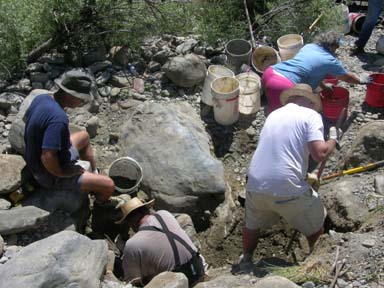
The other main job I have is to keep an eye on what participants are shoveling into the 5-gallon buckets that will be fed into the high-bankers. We only want high-grade material in those buckets! Once in a while, we get someone trying to help things along by shoveling sand or low-grade material into the buckets. That is counter-productive, because those low-grade buckets will ultimately be processed instead of other buckets that would contain high-grade material (more gold). Why do people do this? It’s usually because the loose material is easier to dig, and everyone wants to feel like they are helping.


You learn early in gold mining that you can work all day and not recover very much gold if you are shoveling the wrong kind of material! But this particular group had been listening when I talked to them about this, and they were focused upon filling buckets with material from the layer of streambed that we had identified as being the pay-dirt.
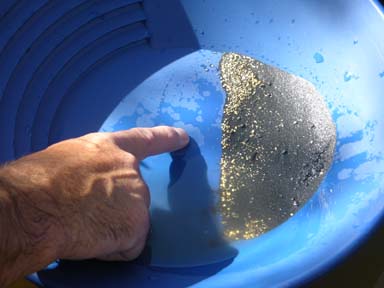
After a few hours of good hard work, we shut everything down for lunch and took a look in our recovery systems. There was lots of gold to be seen there. Some people were hooping and hollering, which is music to my ears. Enthusiasm is a good thing!


We don’t normally clean-up the recovery systems at lunch. This is because the process generally is time-consuming and would likely subtract from the amount of digging we can accomplish after lunch. After seeing all that gold, everyone ate just a little faster than normal so they could get back to work! This is pretty normal. Several participants were already filling buckets even before I finished my peanut butter and jelly sandwich. Gold fever! Everyone was pretty excited!


We processed more pay-dirt for another hour and a half after lunch. I closely watched how things were going. It gets pretty hot out there on Sunday afternoon. When people start slowing down, I know its time to begin shutting things down for the day.
Of course, the first part of shutting things down involves removing all of the gold concentrates from each recovery system. This was the part everybody had worked so hard for all day! The following video sequence captured some of those magic moments as we all got our first good look at the gold that we had recovered:

While one part of the crew cleaned the concentrates from the recovery systems, everyone else pitched in by back-filling our excavations with the rocks that we had been carefully placing in piles all day. By the time we left the area, you could not tell we had ever even been digging or prospecting there. This is the right way to leave a prospecting excavation when you are finished with it!

This is what an area should look like after you have finished prospecting there!

Note: I returned there a few weeks later with the top minerals officer for the Klamath National Forest, and he was not able to point out any of the places where we had been mining!

We timed things so that we were back at headquarters in Happy Camp with our final concentrates at around 2:30 on Sunday afternoon. What do I mean by “concentrates?” Like most other gold recovery systems, high-bankers do not just recover the gold. They recover a concentrate of all the heavy materials which have been shoveled into them. Concentrates normally consist of some (iron) black sands, along with the gold that has been recovered.


Back at our headquarters in Happy Camp, our mission for Sunday afternoon was to separate all of our gold from the other concentrated material. We have a special garage area in the back of our building where this final clean-up process is accomplished. As this is something that every prospector needs to know how to do, we always invite all of the participants to either watch or help with the process. This enthusiastic group was all too ready to help!

We use a special device for final gold separation which is called the “Gold Extractor.” This is basically a finely-tuned, narrow sluice that uses very low-profile riffles. In 30 years as a serious prospector, I have never seen a more effective portable tool for reducing concentrates down to a very small volume (about the amount of a rounded tablespoon) – with zero loss of gold during the process. The whole idea is to reduce the amount of concentrates down to a small enough volume that can be dried for final separation.

Our most experienced panners went through the tailings from the Gold Extractor and were not able to locate a single speck of lost gold. Everyone was happy about that!

After drying our final concentrates, we passed them over a set of final clean-up classification screens to separate the material into several different sizes. The different sizes of concentrate were then placed on separate clean sheets of paper so we could carefully complete the final separation – mainly by gently blowing away the iron sands. This is usually not very hard to do, because the iron is about 3 times lighter than the gold.


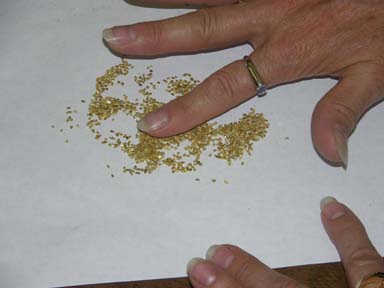
By around 5 pm, we had all the gold cleaned up and on the weight scale. It weighted out at about 13.3 pennyweights. That’s almost 3/4 of an ounce. This was pretty good for about 3 ½ hours of hard work! It was especially good, being that none of us even knew that particular gold deposit existed on Saturday morning!


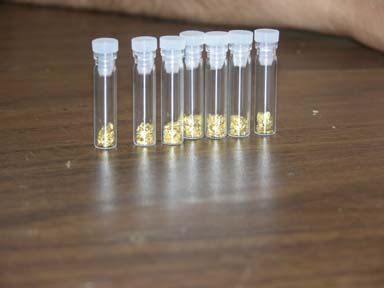
After taking a few moments to pat ourselves on the backs for a job well done, I carefully weighed the gold into equal shares for everyone who participated. I like to place the gold shares in small glass sample viles. But some people prefer to keep their shares in small zip lock baggies. Here is a video sequence that captured part of the final clean-up:


The project was over by 6 pm on Sunday evening. Some participants went away with the first gold they had ever found. Most went away with big smiles on their faces. Everyone went away with a full understanding of how successful gold prospecting is accomplished, from pan-sampling, to production-mining on a small scale, to final clean-up and gold separation. That was going help each of them to become more successful in their own prospecting activities.


By Dave McCracken


This Group Dredging Project took place towards the lower end of the Club’s K-11 claim (Hwy-96 mile marker 63.58) along the Klamath River, not far upriver from Schutt’s Gulch. This is located about 3 miles upriver from where Highway 96 crosses Seiad Creek, near the small town of Seiad.

We conducted another Group Dredging Project towards the upper-end of this claim earlier in the season and did pretty well. K-11 is a very productive section of river, both for dredging and surface-sluicing activity on the far side of the river. The claim is quite long; and despite lots of successful activity, I don’t believe that most of the area has even been adequately sampled yet.

I have had my eye on the lower-end of K-11 since all the way back to 1997, when founding Club member, Tony Steury, was dredging there with a 5-inch dredge, consistently recovering an ounce of gold per day. I was buying his gold, so I knew he was getting it. And because of that, I made a special visit to Tony’s dredging site one day, and even swam down into his excavation to get a first-hand look. Tony was dredging towards the road-side edge of the river, pretty near to the lower-end of K-11.

To my knowledge, no-one ever returned to the area where Tony was dredging to pick up what he might have missed. Tony’s gold was all flakes and fines. It was a lot of gold for the amount of material he was processing through his 5-inch dredge.

Over the years, I have swam down through the lower-end of K-11 with lots of different members who were participating in various group events, and I have always encouraged members to go back there and search for the gold Tony left behind. Tony only dredged in there for a few weeks, so he could not have cleaned the area out. But I have never seen anyone go back there.

That’s the thing about the The New 49’ers; we have so many available options, it takes a long time to get around to all of them!

Anyway, “Tony’s lost gold” was one of the primary targets we were considering for this Group Project. I figured we could find it with an organized group using 3 dredges to sample around the target area. So, a few days before this Group Project, Craig Colt and I were down standing along the edge of the river at Schutts Gulch, taking a hard look at the speed and depth of the water, access points, parking, camping and other things that are important to these Group Projects.

Group Projects require at least a few slow, shallow areas where we can work with less experienced miners. Projects sometimes require more parking than would normally be needed. They require the access to not be too difficult. These are all things we have to think about in advance. Because we don’t know everyone who will be on a Group Project until everyone shows up on Saturday morning, we have to plan for members that might not be up for difficult situations.
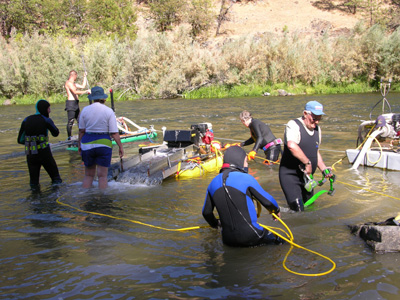
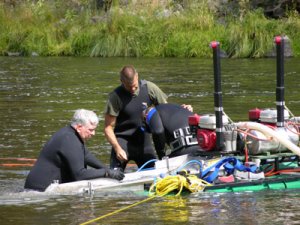
Craig and I spent most of a day comparing the lower-end of K-11 to another very promising-looking area towards the lower-end of K-9. Here is another area where few members have gone, and where the dredging prospects look fantastic! No question that we will do a Group Dredging Project on K-9 in the near future.

Anyway, after spending the better part of a day weighing and balancing the two areas, Craig and I decided we would do this Group Project at K-9. It really looked the best for what we wanted to do.

But on our way back to Happy Camp, we saw a 5-inch dredge floating out on the river towards the lower-end of K-11; perhaps 100-yards upstream of where Tony Steury made his big strike. So we stopped to talk with the member, Bruce Johnson, who was dredging there. He showed us his gold, which consisted of plenty of fines and flakes, with some nice, crystalline nuggets. Wow!

Bruce told us he was getting his gold from around some larger rocks in a hard-packed layer around three feet into the material. The water was only about 6-feet deep out where Bruce was dredging. Bruce told us emphatically that he did not have any problem with the Group Project moving in around him, since he was about to finish his season, anyway. In fact, he said he would welcome the company.

So Craig and I immediately did the smart thing; we asked Bruce if we could operate his dredge for an hour or so, allowing him to keep any gold that we found. With no hesitation, Bruce agreed to allow us the use of his dredge. So Craig and I jumped right into his hole and started dredging without any further delay.

There is an important lesson in this: The New 49’ers is a highly-active mining association, with very expansive property reserves. The choices of where to go are endless. For better success, it is important to narrow the choices to the best-possible prospects any way you can. The most effective way I know to do this, is to get right down inside of an active mining excavation that is recovering high-grade gold. Then you can see for yourself what the streambed layers look like, and where the gold is coming from. It doesn’t get any better than that!

Members often ask me how I am able to readily locate high-grade pay-streaks on New 49’er claims. There is no secret to this. I pay attention to every strike that is made on our claims. Whenever possible, when there is a new strike, I go right down and look at where the gold is coming from, what streambed layers are involved, how wide the pay-streak is, how much volume is being processed, and how the deposit lines out in the waterway. These are things that I never forget!

My memory is poor on some things. But I never forget the details of where someone finds gold! Because I know I can always go back to those same areas with a sampling team and pick up where the earlier miners left off – either at one end of the pay-streak, or a little further up or downstream, where the next pay-streak is located.

The nice thing about a Group Project is that I can direct a dozen or so people, using several dredges, in a very-organized sampling program that is targeted to re-establish a gold-line that has already been found before.

So when Bruce offered to allow Craig and I to use his dredge to have a look at a pay-streak he was actively mining, we wasted no time getting into the water. Bruce told us that most of his gold was coming from the contact zone on top of a really hard-packed grey layer down about three feet into the streambed material. He said he could see the gold sitting right on top of the grey layer. It didn’t take but about 15 minutes for Craig and I to work a top-cut (reaching out and working about 4 or 5-square feet of material off the front of Bruce’s dredge hole) down to the grey layer. Sure enough, we saw the pieces of gold sitting right on top of the grey material. That’s all we needed to see!

The wonderful thing about our mining group is that we have so many really nice people associated with us as active members. Miners helping miners! I cannot tell you how lucky Craig and I felt when Bruce invited us to bring the Group Dredging Project into the area where he was actively dredging up a high-grade gold

deposit!

Here’s my secret to finding gold: When someone offers you a sure thing, take it!

So Craig and I quickly altered our plans to manage this Group Project at the lower-end of K-11 near Schutt’s Gulch. Fortunately, the Forest Service has a very nice developed campground at O’Neil Creek (Hwy 96 mile marker 65.50), about a mile upriver from where we were going to be doing the Project. We made arrangements to rent the group camping site for a week, so participants would have a comfortable, quiet place to camp.

This Group Project involved 12 participants (11 men and 1 woman), plus my two very-experienced helpers, Craig Colt and Ernie Kroo and myself; 15 of us in all.

Several of the participants were dredging for the first time ever, and several others had little previous experience under the water. One of the primary objectives of these projects is to help all participants achieve personal confidence while dredging underwater. We take this responsibility very serious. The nice thing about this Project was that since we already pretty-much knew where the gold was, I was going to be able to put 100% of my own focus into helping others dial in, to what we needed to do.

Most of us camped in the Forest Service O’Neil campground for duration of the project. So, we were also able to spend some very pleasant after-hour time visiting and enjoying our moments together during this adventure. Ernie Kroo is one of the best guys on a BBQ-pit that I have ever seen, and he takes great pleasure in making sure everyone eats well on these Projects. The food was great!

All of the participants in this Project arrived full of motivated-enthusiasm. When Craig and I walked everyone down on the first morning to show them where the gold had already been located, it was everything we could do to slow things down enough to keep track of the activity. I have to say, this was the fastest I have ever seen three dredges put into the water and set up. People were actually running with the loads! Usually, I am happy if we just get camp set up and the dredges in the water on the first day. But this was all done before lunch on the first day of this Project!

So with just a little discussion, we turned three separate teams loose on Saturday afternoon in an organized sampling plan. One dredge was placed around 60 feet in front of where Bruce was dredging, directly in line with him. Another dredge was placed around 60 feet downstream and directly in line with where Bruce was getting his gold. And the third dredge was sent about 100 yards downstream in an effort to find “Tony Steury’s lost gold.”

This type of gold mining (dredging) is not rocket science. Since Bruce was getting good gold, we were nearly certain that if we got directly in line with him in the river, and dredged down to the very same layer, that we would get gold, too. We proved this theory correct by the end of the first day. While our upstream dredge was already producing fines and nice-sized golden flakes, the downstream dredge started producing nice big corn-flake-sized crystalline gold nuggets.

I just cannot tell you how excited everyone was! I was sitting back thanking my lucky stars for how easy the week was going to be for me. Incredible!

These Group Dredging Projects are usually very challenging for me. While there are many things we have to make happen during the week, they all basically add up to three very important things: (1) we have to help all the participants get dialed in to what we want to accomplish, with no-one getting injured. (2) We have to locate a high-grade gold deposit. (3) We need to develop the gold deposit in such a way as to recover as much gold as we can during the remaining time allowed to us.

While the other things are incredibly important, I can tell you from plenty of experience that it is the recovery of lots of gold that carries the emotional tone of the group during the project. Every gold deposit is different, and therefore causes different types of feelings. This deposit was full of beautiful, crystalline nuggets that were being picked out of the dredges after every dive – and sometimes even while the dives were happening. All week long, people were rejoicing in their excitement about the nuggets we were recovering. What a week!

All of the important choices and decisions are discussed during these Group Projects. This is part of the experience. Because, just like the fork in the road when you only have enough time to go in one direction, every main choice during any gold prospecting expedition will affect how things come out in the end. While we have narrowed the choices down to just a few by the time we begin one of these Projects by choosing the section of river, we still must decide where we will do our sample holes, and how much time we will devote to each sample.

There are never any fixed answers to these choices. There is an emotional and intellectual chemistry involved where the results of samples are compared to each other, measured against the prior information we have about the area, and balanced against how much time we have. Seldom is there a fixed right-or-wrong answer. You just do the best you can and push forward. We always try and get all of the participants directly involved with this chemistry; because this is the risk-taking adventure-side of prospecting that turns to an incredible feeling of wonder and excitement, and a fantastic feeling of team-work accomplishment, when high-grade gold is recovered.

Having seen Tony Steury’s gold back in 1987, I knew without a doubt that his pay-streak was richer than the one we were mining near­­­ Bruce. But the question was: When there is a limited amount of time, and we are already mining a very good pay-streak further up-stream, how much of our available resources should be invested into looking for something we might not find? One of our three dredges (33% of our production-capability) was being spent looking for “Tony’s lost gold” with no luck so far. So, by mid-week, we collectively decided to move the third dredge up to the sure-pay-streak and leave the richer strike for another day.

The main challenge we faced in the established pay-streak, was that the richest gold was being recovered out of the deepest, fastest water out in the middle of the river. Although, luckily, the biggest, nicest nuggets were being recovered closer to the edge of the river, where the water was much slower. So we spent most of the remainder of the week shifting crews off and on, with everyone dredging where they were most comfortable. I think it is safe to say that everyone involved with the project was personally challenged in meaningful ways as the week played out.

In all, we recovered 5.5 ounces of gold for the week, of which 52.7 pennyweights (half the gold) were nuggets. This was, by far, the most nuggets (5 nice nuggets to each participant) we have ever recovered during a Group Project.


Several of the participants, along with other members of the Club, stayed around the immediate area to work out the deposit with Bruce after our project was completed.

But don’t think for a moment that this claim is worked out. We could easily devote 10 more Group Dredging Projects to sample this very long claim! The potential is fantastic!


As told to Marcie Stumpf/Foley

BOY!!! All my life I’ve wanted to go look for gold, and, by golly, now I’m going to give it a try!” Ralph said, as he looked at the advertisement offering an introductory week on The New 49’er claims.

Ralph Geidel is a New York City resident—he was a fireman, and is now retired due to an injury, and spends a great deal of time metal detecting. While browsing through the magazines in his favorite shop, he came across “Gold and Treasure Hunter” magazine. Taking it home, he was carefully going through it when he came across the advertisement, and his excitement grew as he read all the details. He immediately called his brother Michael, who also lives in New York City (and is still a fireman), and they eagerly discussed how they could get together to make the trip to California.

Ralph’s son, Ralph, Jr., was so excited about the prospect that they immediately included him in their plans. Every time they were together, until Michael’s vacation time, their talk centered around the plans for the trip, and when vacation time finally came they were thoroughly prepared.

On the trip to California they stopped at Yellowstone, and a couple of other places to see the sites, but were so eager to try their hand at finding gold on their own that they didn’t take much time!

On their arrival in Happy Camp, they checked in at The New 49’er Headquarters and followed the recommendations for setting up their tent camping area.

The next morning they eagerly arrived back at headquarters, ready for an original tour of the mining properties with Bill Stumpf. Bill spent several hours with them, showing them different areas, showing them how to pan and how to use a Mack-Vack.

The first site of gold sent a rush through Ralph, and he knew he was hooked! Gold! Real, actual gold, and he’d found it! What a thrill. Nothing he’d ever found while metal detecting had ever caused this reaction!

On their arrival back at headquarters, Ralph bought a Mack-Vack, and off they headed. The three of them worked tirelessly the rest of the day. At the end of the day when they panned out, they had more gold to put in their bottle.

You see, they had spent so much time talking to all their friends and neighbors about their trip that by the time they started out, they began to have some doubts about whether they’d find anything that they could show off upon their return.

The next morning they returned to the headquarters once again, to take part in the weekend training program and group mining operation conducted by Dave McCracken and Bill. The morning was spent under shade trees at outdoor tables, learning where to look for gold, and how. That afternoon, after lunch, they met the other participants back at headquarters, and they all headed upriver. They were going to an area across the river, where “Railroad Don” had made a strike the week before, using a high bank unit.

Everyone learned how to pan, and Dave and Bill helped them locate likely areas for sampling. The afternoon was spent sampling the area, locating the richest spot.

Next morning they were all waiting early, eager to load up the equipment and get upriver, where two high banking units were set up once all the participants were ferried across the river in a boat. Ralph really enjoyed the friendship and camaraderie shared by all the participants, and they could see they were getting gold as they worked! Boy, what fun! This was just great—out in a beautiful setting, fresh air, with his son and brother and lots of great people—what a life! Before they headed back to headquarters to clean up the concentrates, Ralph, Mike, and Ralph, Jr. (already nicknamed “the New York Boys”),
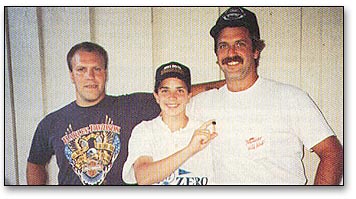
made the decision to rent the high bank unit on the spot.

When they returned to headquarters with the concentrates, Dave showed how to pan it down and clean it up, and then they weighed it. They estimated their working time at about three hours. They’d found 1/2 ounce in one afternoon! Everyone was so excited that the joking and laughing continued all through the dividing of the gold, so that each participant had an equal share.

That night the excitement lasted through cooking their meal outdoors, and while sitting around after, they eagerly made plans for the week. Their goal was to go home with an ounce of gold!

The next morning they were at it early, and worked hard all day. There were several groups working in the area, and Ralph was really impressed with the help they received from all the old hands. “High banker Jerry” (Jerry Snell of Eugene, Oregon), Bob and Vivian Harris of Florida, and “Railroad Don” of Klamath Falls, Oregon, all longtime members, gave help to the newcomers freely.

Most nights they were so tired they didn’t make the trip into town—several days, Ralph, Jr. worked with the Mack-Vack after Ralph and Mike quit high banking for the day, concerned that they might not fill their bottle. But, during the group mining operation they did spend Saturday evening in town so they could attend The New 49’er potluck, where they met dozens of club members, and had a great time listening to stories, and telling about themselves, as lots of people were really interested in learning about them, and showing off the gold they’d found.

All the rest of their week they worked hard, arriving early and staying late, adding each day’s “take” to their bottle. On Saturday they cleaned up their concentrates for the last time, got ready to leave in the morning, and headed into town for their last potluck. After eating, everyone who’d met them was eager to know how they’d done. Huge smiles lit their features as they hauled out their bottle—it was full, right to the top! They’d actually found an ounce, all by themselves, with no more knowledge than what they’d learned in their week on the Klamath River.

They passed the bottle around, someone snapped a photo, and then they were off, heading back home. The excitement from the trip stayed with them, and they recounted the events of the week as they traveled across country. Ralph had saved five full buckets of concentrate from their cleanups, and they were hauling it all the way home. He wanted to share the excitement of panning with friends.

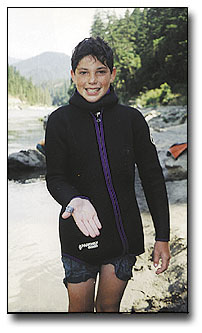
After arriving home they were celebrities! They were gold miners! And, every barbecue they had for the rest of the summer, friends would pan out some of the concentrates Ralph had brought back, and find some gold.

Ralph couldn’t get their trip out of his mind, and he has plans for this year all worked out—he can hardly wait. First, he’s joining The New 49’ers—right away, before leaving home, even. Then, the minute Ralph, Jr. gets out of school they’re heading back out to California, and Happy Camp. They’re going to stay for two whole months this trip, and he’s going to have a dredge—a new, 5 inch dredge. He’s going to learn how to dredge, and the sky’s the limit! Wow! No telling how much gold he may go home with this year!


By Sara Koehler

It has been said that there is a time for everything under the sun. Well, the time for dredging is definitely summertime…And, there is no better place to dredge than Happy Camp, California! “Happy Camp.” The very name makes me smile in disbelief! This place really does exist! The water is cool, but not too cold, and the weather is usually quite mild. Better yet, there are “Gold Nuggets” as big as your thumbnail! We always find enough nuggets to make every day feel like a “surprise” birthday party!

Wherever we settle in for our dredging season, we all work as a team to make our home away from home as comfortable and relaxing as it can be. The children take turns taking care of our trash, making sure we always have a nice, clean camp. Everyone takes turns doing dishes and setting the table for meals…all except for Scott and me! With six children there are plenty of extra hands, eager to be of help.
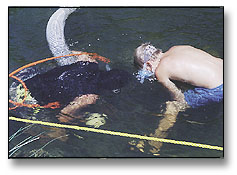
When Scott and the boys get our equipment ready to launch at the spot we have chosen on the Klamath River, we dredge for a couple of hours at the beginning of each day. We can’t contain ourselves, and check our sluice box for gold every time we stop the engine to refuel. If some of the children are on the beach and hear the dredge engine being turned off, they all dive into the river and swim up to the edge of the dredge to get a sneak preview. We lift the flare’s flap, and “Surprise,” there are beautiful gold nuggets staring us in the face!

At the end of the day, we jump in our car and drive back to our camp. We try to take turns talking about everything that had happened to us during the day. Our adventure is not just about finding gold; but, also about the frogs, the insects, the birds, the swimming feats, the great lunch, the interesting people we meet at the river, the weather conditions, and all the “little things” that make us laugh.

How did we find this place? We’ve always had an interest in gold mining and had heard about Dave Mack’s videos from a friend of my brother. We bought Dave’s video at a mining equipment store in Sacramento, and had become spellbound watching Dave’s mining techniques, instructions and demonstrations. This is the first time that we had ever heard of the New 49’ers and Happy Camp! I knew that my husband, Scott, was going to get really excited about “all this new information!” Immediately we called the New 49’er office, that very same day!

We don’t want to sound like expert gold nugget hunters, because we’re not. We don’t own any private claims. When we became members of the New 49’ers Prospecting Club we instantly had over 60 miles of mining claims along the Klamath River and its tributaries in the northwest corner of California. Thus, we began our dredging adventure –we signed up for group dredging projects, and we even ordered a 5-inch dredge!

All winter long we watched all of Dave Mack’s videos, so that when we finally got to meet him face-to-face, our kids thought that they already knew him personally. Dave was very surprised, and taken aback, by all the admiration and affection our kids showered on him. If Dave Mack had a free hand, one of my kids had a hold of it. The other ones just waited until another free hand became available so they could latch on. I have to say that Dave took our children’s affection with good cheer and appreciation.
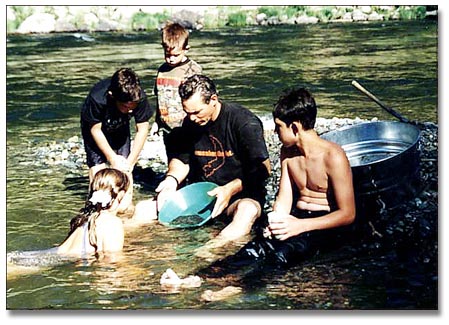
Our six children accompany Scott and me on our gold mining adventures. I do all the cooking and run errands, but there is also plenty of time for me to enjoy reading and sewing on the beach. It is very relaxing, and when Scott comes up for a break or lunch, we enjoy just being together in these great outdoors and fresh air. The children assist in all the various aspects of dredging, but there is plenty of time for swimming, getting sunburned, and eating!

Scott spends as much time as possible under the water, “vacuuming” the bottom of the river. We started out with both Pro-Mack 2-inch and 5-inch dredges. Then the second summer we ordered a 10-inch, customized, “wonder”-dredge. It is a beautiful piece of equipment! Being on it makes one feel like a “King and Queen of the River.”

We made our first trip to Happy Camp in June of 1995. Taking our tents, tent-trailer, and dredges, we camped at the Anderson Campground, on the Klamath River. The weather was chilly and wet, but we sure did have fun anyway! We dredged, panned, and high-banked. We attended group mining projects and attended claim tours. We cooked, washed clothes, read books, talked-over ideas and created many “plans.”

During our first week in Happy Camp the Discovery Channel (Cable TV) paid us a visit at our home on the river. Their crew was producing a show entitled “Easy Does It!” They wanted to film a piece on small-scale gold mining and they spent most all of one day with us. The cameraman filmed Scott dredging and the children panning. They interviewed both Dave Mack and us. The next time we heard from the Discovery Channel was at the end of the summer when they called our home to ask how much gold we had found. A few weeks later they sent us a copy of the 5-minute segment that they had made for television. Then a few months after that we were actually on television! We were thrilled!
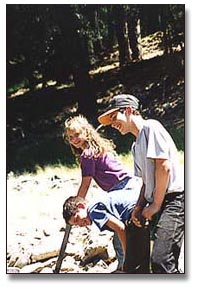
After our time at “Anderson Campground,” we moved to a place down-river from Happy Camp named Independence. During that same first summer we camped on a roadside turnout, 230-feet above the claim. Getting down to the river each morning, which was a difficult access from that location (downhill), made for an exciting beginning and ending of each day. Scott and the kids immediately went to work cutting a trail down to the river. It was a very steep trail, and perilously paved with poison oak! Our children became experts in identifying poison oak! The section of river we were on had small and large boulders that created a nice area for our kids to swim in, away for the rushing flow of the Klamath. It was deep enough and safe enough for Ben, our youngest, to dive off some of the boulders. At the end of the day we would all get filthy-dirty clawing our way back up to our camp. The “best,” or should I say most challenging, part of the day was that we had no running water! But, otherwise we certainly got a lot of great exercise! That particular summer was extremely hot, and there was no break from either the heat or the “jack-braked” semi-trucks. The high point of our experience at Independence was being invited by some very hospitable, new friends to take showers in their home!
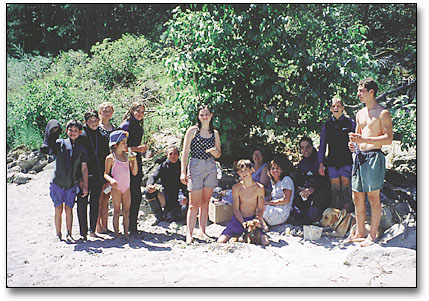
The next summer, 1996, we stayed with friends in their house, and felt free to dredge anywhere that looked appealing. We learned how to work the 10-inch dredge. We couldn’t believe the attention the dredge received, running or not. It has incredible size, volume, power, and beauty! This is when we first met the Andrezejewski family for the first time.

By the beginning of the summer of 1998 our family was no longer working and functioning in isolation. We teamed up with a wonderful couple, Max and Lesley Andrzejewski, and their five children. They had driven to Happy Camp every summer for three years from Pittsburgh, Pennsylvania with their children. We “hit it off” immediately when we met them for the first time at a weekly New 49’er potluck. We have become extremely good friends since then! We have done so many things together; dredging, eating, shopping, making repairs, putting out fires, and even doctoring “ouch-ies.” All these activities have firmly “cemented” our friendship!

Two sets of parents, eleven children, two dogs, a pan full of gold, and a cool river on a hot day all add up to non-stop adventure and fun! We have all learned a lot from each other in many, many ways! Some of the lessons we learned together even included “bloopers,” such as: Don’t fill your dredge’s gas tank while it is still running; keep plenty of duct-tape on hand; don’t forget to wash your ears out with Domeboro after dredging; peanut butter and jam sandwiches taste best when eaten on a beach; any kind of cookies and chips will be devoured; and be sure to take lots of food to the Saturday night potlucks! Happy Camp is a great place to bring a family. There’s no doubt about it! It’s also a good place to invite your friends to come and visit. The area is really beautiful and the New 49’ers are a great group of people. They are helpful, friendly, hardworking, and adventuresome.
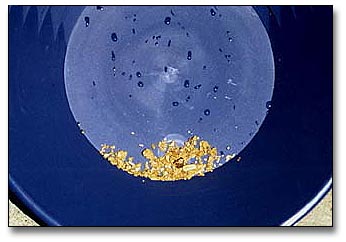
But, did we find many gold nuggets? Yes! We kept our ears open and heard a hot tip from Dave McCracken during one of his river tours with 20 or more people. “Go to this spot! It has nuggets along the far bank,” he said. We checked it out, and sure enough, he was telling the truth!

We’ve been coming to Happy Camp for the last four summers. We’ve camped in campgrounds and on a highway turn-out, stayed in a motel, “borrowed” and rented friends’ houses, and this year we’ll probably buy our own property. I will be glad to have a “permanent” place to call home during the summer when that “dredging itch” needs scratching, and we all climb into our car and head back to Happy Camp!

Really, though, we didn’t start gold mining to become rich. God has truly blessed us with a wonderful family and many, very dear friends—who have become family. We have already found the Motherlode!


by Ulf Dannenberg

The morning chill had not quite departed when we gathered outside The New 49’ers headquarters in Happy Camp, California. A crowd of people had arrived from all parts of the country, including one from Switzerland, and were chatting happily as they sat on benches underneath the few apple trees.

It felt like being back in school again, with the large chalkboard looming in front of us. Dave McCracken, founder of The New 49’ers and known worldwide for his abilities in gold mining, started off the day by asking all participants to introduce themselves and talk a little about where they had come from.

Some of the participants were active members of The New 49’ers organization, but many others were here to try out the hobby of gold mining for their first time. There were people of all ages in the class.

After giving his personal story of how he became a gold miner, Dave got down to the business of his two-hour lecture on the basics of mining for gold–where the gold is in the river, and why it is in one spot and not in another. Even for me, some aspects of the theory were new, although I have been a gold miner for a couple of years. The lecture was quite refreshing in that Dave kept returning to the fundamental that each person only does as well as he or she applies oneself to the task of gold mining. By the end of the lecture, this was clearly true to all of us.

Dave encouraged all participants to ask plenty of questions during the lecture and this enabled people to really get down to what was on their minds. Some had prior experiences and were looking for answers on how to improve their skills.

At noon we took an hour off for lunch. Later in the afternoon we found ourselves in practical application of what we had covered earlier. This included a hand-on demonstration of gold panning, vack-mining, and sampling. Our destination was the Glory Hole, one of the richest mining claims owned by The New 49’ers.

Equipped with shovels and pans, classifier screens and crevicing tools, we spread out on the bank of the river trying

to find a good spot for the highbanking operation which we would be participating in on the following day–first we had to locate gold!

It was a nice, hot sunny afternoon. some of the participants took breaks to go swimming in the river. We were finding gold as well! Every pan held at least a few tiny specks. Dave and his assistants, after giving demonstrations, set everyone to work in a contest to find the richest area, with the winner to end up with the biggest nugget on the following day. Dave then proceeded to observe and give further assistance to anyone who needed it in their panning and sampling techniques.

One thing we learned is that you need to decide what your satisfaction level is going to be. For some gold prospectors, it is enough to find one pennyweight (1/20th of an ounce) a day. Others are disappointed with two or three pennyweight. Make up your mind about how much gold you want to find. If one spot doesn’t seem good enough, look for a new location. And always do your testing before setting up your highbanking equipment.

Proper testing tells you how rich one specific spot is in comparison to other locations. The river bed and gravel bars might look good, but there is no way to really tell without adequate testing. Since generally, there is flood gold almost everywhere along the Klamath River, the main difference is in the concentration (richness) of the gold deposits.

By the end of the afternoon we had found a spot that looked quite promising. It was producing from 50-200 colors to the pan along with some fairly good-sized flakes. At around 4:30 pm, we knocked off for the day to give those of us who wanted to go, a chance to get ready for the Saturday night potluck and get-together which is sponsored each week by the 49’er members. Everyone was invited to attend. And it was a very pleasant experience. Newcomers were introduced, jokes and “Murphy’s Law” mining stories were told–which had everyone laughing. The food was abundant and quite good. Dinner was followed by a substantial drawing of prizes, and further games and cards for those who wished to play. Quite a nice experience and friendly crowd!


Tags